How Appreciation Sharpens Leadership Skills After 40
Discover why appreciation is one of the most underrated leadership skills after 40 — and how it builds trust, loyalty, and resilience in your team and career.

You're Still Chasing, Aren't You?
 The memories that matter happen when you stop checking email and start being present.
There comes a point in your career when you realize you've been running on a treadmill of achievement for so long that you forget to ask what you're running toward. I know that feeling. I lived it.
I spent decades in technology, building products, solving problems, and climbing. And somewhere along the way, I started measuring my worth by what I had shipped, what I had launched, what I had closed. The next deadline, the next milestone, the next promotion. It never stopped.
But here's what I learned the hard way: the people who sustained real success weren't the ones who just kept grinding harder. They were the ones who learned to appreciate — genuinely appreciate — the people around them, the progress they'd already made, and the moment they were actually in. That shift changed everything for me. And if you're over 40 and feeling like you're still chasing something you can't name, it might change everything for you too.
You are not too old to make this shift. You have not missed your chance.
The moment you stop chasing and start appreciating changes everything.
Achievement Got You Here. Appreciation Will Take You Further
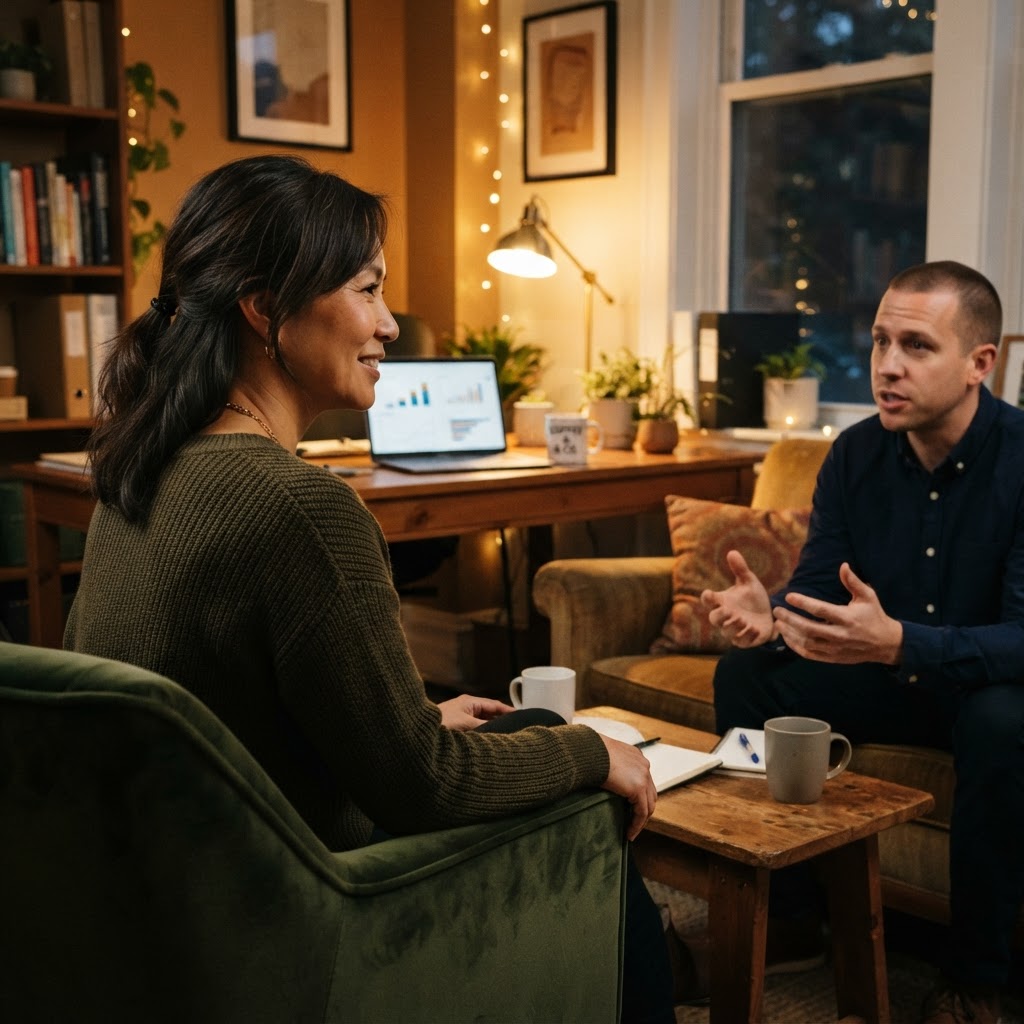 When people feel seen, they give you their best work.
Let me be honest about something. For a long time, I thought appreciation was nice but not strategic. I'm a tech guy. I like results. I like metrics. The idea that saying "thank you" or acknowledging someone's effort could move the needle professionally felt, well, soft.
Then I worked with a manager — the kind who monitored everything I did because she couldn't believe my coworkers and I were actually productive when we were also laughing and enjoying ourselves. I used to joke that I should put a sofa in my cube and charge a therapy fee because people constantly came to me to talk through problems. She saw the fun and assumed the work wasn't happening. But it was. We were collaborating, solving real issues, and producing results — because people felt seen and heard.
That experience taught me something I carry to this day: appreciation isn't about being polite. It's about creating an environment where people give you their best work because they know it matters. That's a leadership skill, not a personality trait.
When you take the time to genuinely recognize someone's contribution, you're not just making them feel good. You're building trust. You're creating loyalty. You're making it safe for people to bring ideas forward instead of holding them back. And in your 40s and beyond, when your network and your reputation are your biggest assets, that kind of influence is priceless.
The Shift From "What's Next?" to "What's Now?"
One of the hardest things about being an ambitious professional is that you're trained to always look ahead. What's the next goal? What does the next quarter look like? What's the next role? There's nothing wrong with ambition — I'm all for it. But when you never pause to appreciate where you are and what you've already built, you start running on empty without knowing why.
If you're caught in that cycle of constant chasing, it might be time to explore why smart professionals need better recovery, not just better discipline — because the answer isn't always pushing harder.
I remember buying my first car online in 1999. It felt like the future. And it was — that was a big deal back then. But I barely sat with it. I was already thinking about what was next. Looking back, I wish I had taken a beat to just appreciate the moment. Because those moments string together into a life, and if you're always skipping past them, you wake up one day wondering where they all went.
Appreciation — for your team, for your progress, for the people who showed up for you — is what keeps you grounded enough to keep going strong. It's resilience disguised as gratitude.
3 Ways to Build Appreciation into Your Leadership Skills Today
Alright, enough philosophy. Let's get practical. Here's how you can start making appreciation a real, intentional part of how you lead — starting this week.
- Name it specifically. Don't just say "good job." Say what was good about it. "The way you restructured that presentation made the decision crystal clear for the team." Specificity tells people you're actually paying attention, not just checking a box.
- Appreciate the process, not just the outcome. Not every effort ends in a win. But the person who stayed late, who pushed back on a bad idea, who tried something new — that deserves recognition too. When you appreciate effort and growth, not just results, you create a culture where people take smart risks.
- Start with yourself. This is the one most people skip. When was the last time you paused to appreciate how far you've come? The skills you've built? The people who helped you along the way? I received a kidney transplant in 2019, and that experience gave me a renewed appreciation for life itself — every single day. You don't need a life-altering event to start practicing this. But don't wait for one either.
Encouragement is good, but action changes things. Pick one of these and do it this week. Just one.
This Is About More Than the Office
 Your next chapter can still be powerful — start by appreciating how far you've come.
Here's where I want to widen the lens. Appreciation as a leadership skill doesn't stop at the office door. It flows into your family, your friendships, your travel, and your whole life.
Some of my best memories — the ones that actually matter — happened when I unplugged from technology and was fully present with my family. Disney World with the kids. Cruises where nobody was checking email. Hawaii, just being there, not planning the next thing. Those trips taught me that appreciation isn't just a professional tool. It's a way of living that makes your life feel full instead of just busy.
Busy does not mean stuck. But busy without appreciation is just motion. You deserve more than motion. If you're ready to build something more intentional, the personal growth resources for professionals over 40 on NCURAG are a great place to start.
Your next chapter can still be powerful. Whether you're leading a team, building a business, or just trying to figure out what comes next — appreciation is one of those quiet, underrated skills that separate people who burn out from people who keep building.
What's Really Holding You Back?
If I'm being direct — and I always try to be — a lot of professionals over 40 are carrying around the belief that they need to keep proving themselves. That somehow, after everything they've done, it's still not enough. So they push harder, appreciate less, and wonder why they feel disconnected from the people around them.
Sound familiar?
You are better than that. Not in a shaming way — in a "you deserve to enjoy what you've built" way. Appreciation isn't about settling. It's about fueling yourself and the people around you with something that lasts longer than a quarterly review.
Make the memories while you still can. Build the relationships that matter. Lead with appreciation and watch what happens — to your team, your career, and your life. For more on how leadership lessons translate into life-building, check out what product leadership taught me about building a better life.
Take the Next Step
If this resonated with you, you're not alone. The shift from chasing to appreciating isn't just about feeling better — it's about leading better, living better, and building something that lasts.
- Subscribe to the NCURAG newsletter for weekly insights on leveling up your leadership and your life after 40.
- Ready to go deeper? Join the 30-day challenge and start building a life that gives you energy — not just one that looks good on paper.
Don't wait for the right moment. This is it.