Overcoming Excuses: Break Free from the 'If I Had' Loop
Overcoming excuses starts with one mindset shift. If you're still saying 'if I had more time or money,' here's how to break the loop and start building now.

There's a sentence I used to say all the time. I said it in my car on the way to work. I said it at dinner tables. I said it quietly to myself late at night when I was tired and honest.
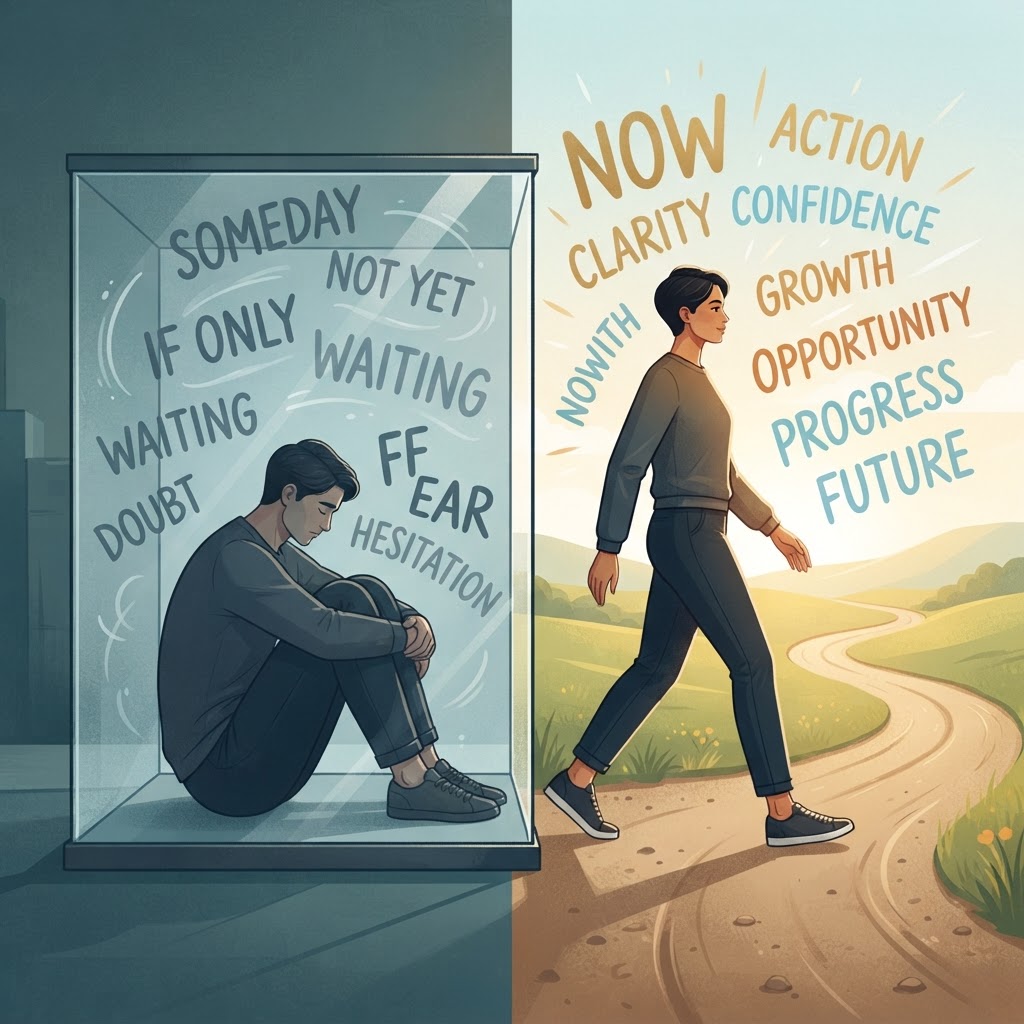
"If I had more time, I'd finally start that thing."
Sound familiar? Maybe yours sounds a little different. "If I had more money..." "If I had a better network..." "If I had started ten years ago..." But the structure is the same. And here's what I eventually had to admit to myself — that sentence wasn't a plan. It was a hiding place.
I wasn't waiting for the right moment. I was avoiding the discomfort of beginning. And the "if I had" framing made it feel responsible. Reasonable. Almost noble. Like I was being thoughtful instead of stuck.
I wasn't being thoughtful. I was stalling. And if you're over 40 and still running that loop, I want to talk to you directly today — because the clock is real, and your dreams deserve better than a perpetual rain check.
Why 'If I Had' Is a Psychological Trap, Not a Strategy

Here's the thing about scarcity thinking — it feels like logic. Your brain frames the lack of a resource as a legitimate blocker, and so waiting feels justified. Rational, even. But what's actually happening is that your mind has found a socially acceptable way to protect you from risk.
Think about it. If you never start, you never fail. If the obstacle is always "out there" — more money, more time, more support — then your dream stays safe and intact in your imagination. Untested. Unkillable.
The problem? It also stays unlived.
It's a form of self-protection — we unconsciously shield ourselves from the possibility of failure by never fully launching. The "if I had" statement is the language that keeps that protection in place. It sounds like planning. It functions like paralysis.
And for professionals in their 40s and 50s, this trap has a particular bite. We've accumulated enough real responsibilities — mortgages, kids, aging parents, career obligations — that the excuses have actual weight to them. They're not completely made up. That makes them harder to challenge. But harder isn't impossible.
The Shift That Changes Everything: From 'If' to 'How'
I remember the exact conversation that flipped the switch for me. I was talking to a mentor — older, wiser, someone who'd built something real from nothing — and I laid out my whole "if I had" list. He listened. Then he asked me one question:
"What could you do today with exactly what you already have?"
I didn't have a good answer. And that silence told me everything.
The shift from "If I had" to "How can I" isn't just a word swap. It's a complete reorientation of your agency. "If I had" is passive — it puts the power outside of you. "How can I" is active — it puts the power right back in your hands.
You stop waiting for conditions to be perfect. You start working with conditions as they are. That's not lowering your standards. That's how real progress actually gets made.
How to Break the 'If I Had' Loop — Starting Right Now
This isn't about motivation. Motivation is fleeting. This is about building a different habit of thinking — one that gets you moving regardless of how you feel or what you currently have. Here's how to do it:
- Write your excuses down — all of them. Don't censor. Get every "if I had" out of your head and onto paper. "If I had more savings." "If my kids were older." "If I had more energy." Name them. You can't challenge what you haven't faced. I did this exercise once and filled half a page. Seeing them lined up in a row was humbling — and clarifying.
- Ask the honest question for each one. Next to every excuse, write: "Is this a real barrier or a perceived barrier?" Some will be real constraints — those deserve real problem-solving. But a lot of them, maybe most of them, are perceived. They feel true, but they're not fixed. They're negotiable. That distinction matters enormously.
- Reframe with "How can I" right now. Take your top excuse and flip it. "If I had more time" becomes "How can I find 20 minutes today?" "If I had more money" becomes "How can I start with $50 instead of $5,000?" The goal isn't to minimize the challenge — it's to find the version of the goal you CAN pursue with what you currently have. There's almost always one.
- Take one visible action in the next 24 hours. Not next week. Not after the weekend. Today or tomorrow. It doesn't have to be big. Send the email. Register the domain. Write the first paragraph. Make the call. The action itself matters less than the pattern it creates — the pattern of someone who starts instead of waits.
- Audit your circle. Who are you spending time with? Because "if I had" thinking is contagious. If everyone around you is stuck in the same loop — complaining about what they don't have, waiting for perfect circumstances — that energy seeps in. Intentionally spend more time around people who are moving. Who are building things. Who talk about what they're doing, not what they're waiting for.
What You're Really Protecting — and What It's Costing You
I want to sit here with you for a second, because this part matters.
The dream you keep deferring? It's not just a goal. For most of us over 40, it's tied to something deeper. A vision of how you want to live. The kind of freedom you want to feel. The legacy you want to leave your kids. The version of yourself you know you're capable of becoming.
Every time you say "if I had," you're not just postponing a project. You're postponing that life. And the years don't slow down. I don't say that to add pressure — I say it because I believe you deserve to feel the weight of it and then choose differently.
I'm grateful every single day that someone challenged my "if I had" thinking when they did. Because the life I'm building now — the flexibility, the travel, the work that actually aligns with who I am — none of it would exist if I kept waiting for the perfect conditions that were never coming.
The conditions were never going to be perfect. They aren't for anyone. The people living the life you admire didn't have everything lined up first. They started messy, imperfect, under-resourced — and they built as they went.
The Question That Separates Action from Excuses
So here's what I want to leave you with — and I want you to actually sit with it, not just skim past it.
What's the one thing you keep saying "if I had" about — and what's one thing you could do about it today?
Not in theory. Not someday. Today.
Because you are, quite literally, one decision away from being a person who's moving toward that thing instead of away from it. The resources you're waiting on? Some of them will come once you start. Some of them you'll find you don't actually need. And some of them you'll figure out how to get precisely because you're in motion.
But none of that happens until you stop saying "if I had" and start asking "how can I."
That shift is available to you right now. Not when you're ready. Right now.
If this hit home, I'd love to have you in the NCURAG community. Every week I send out real, practical strategies for professionals over 40 who are done waiting and ready to start building. No fluff. No hype. Just honest tools for reclaiming your ambition and designing the life you actually want.
Subscribe to the weekly newsletter here — and let's get you moving.