Why Self-Reliance Is the Ultimate Career Strategy After 40
Is your career truly secure? Learn why self-reliance is the ultimate strategy for professionals over 40 to reclaim autonomy, build resilience, and thrive.
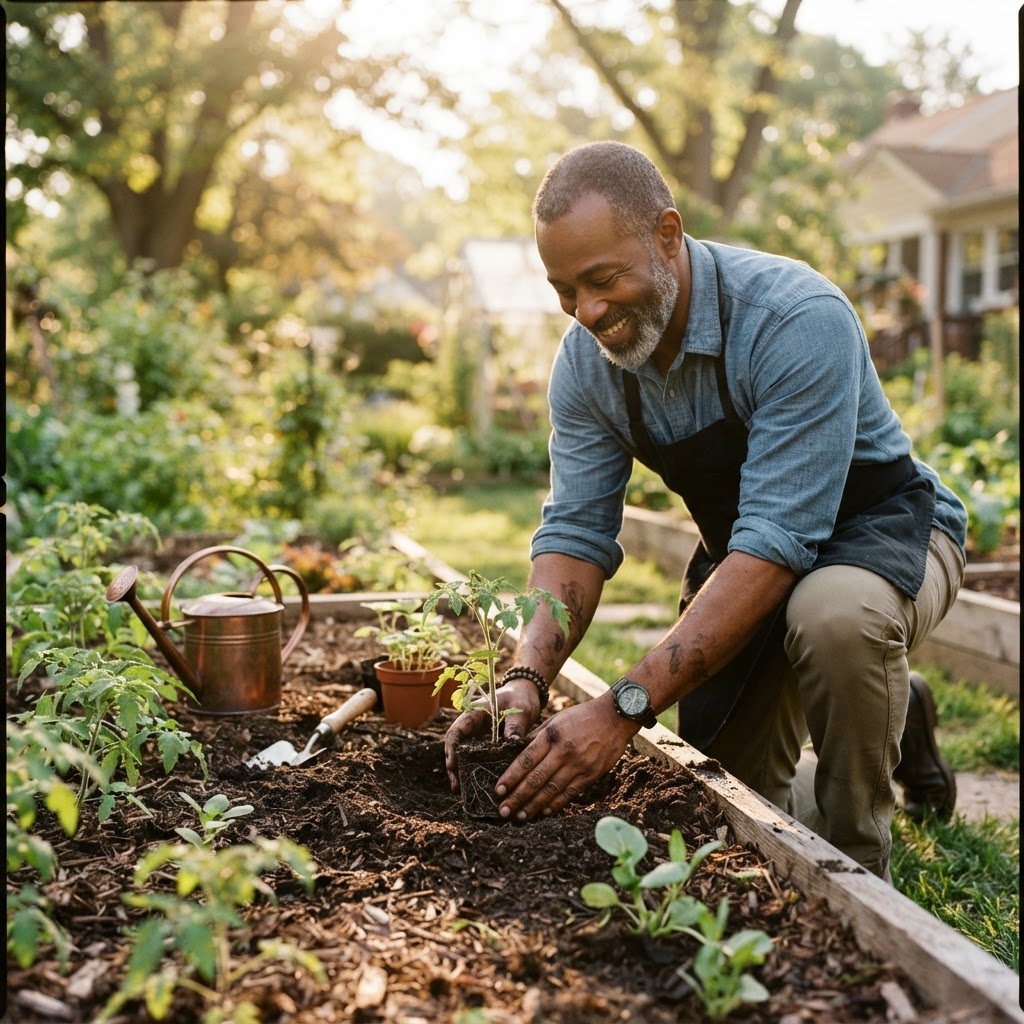
When Was the Last Time You Grew Something You Ate?
 Cooking from scratch is one skill that reduces a dependency — and changes how you think about everything on your plate.
My childhood wasn't filled with toys; it was filled with trash cans. Every evening at my family's dental office, I dragged them to the curb while my friends were playing. I hated it, but that drudgery taught me the most vital career lesson I still use today: stop waiting for someone else to do the heavy lifting. Every kid on my block was outside playing, and I was working. But that experience planted something in me that I didn't fully understand until decades later: the realization that if you want something done, you figure out how to do it yourself.
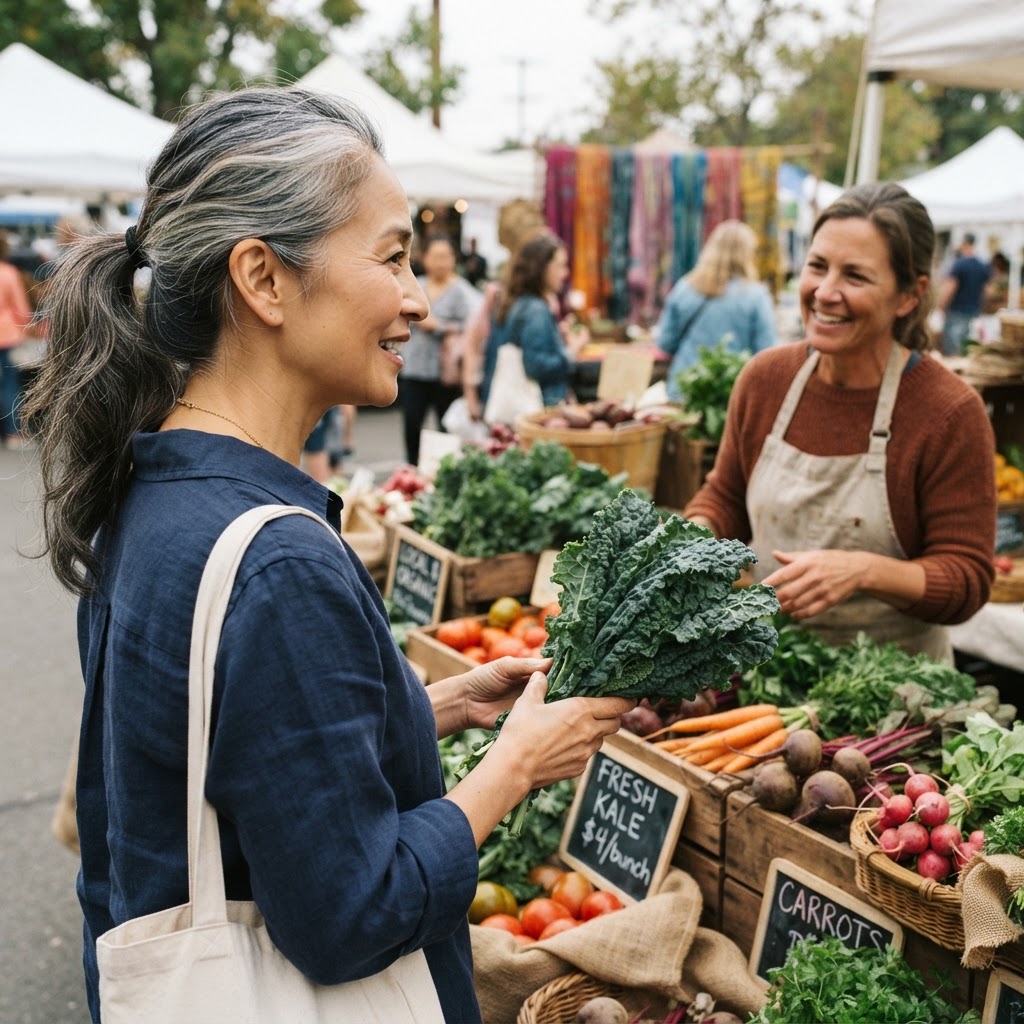 Understanding where your food comes from is the first step to seeing the system.
Here's what I want to ask you honestly: When was the last time you grew something you ate? Not bought. Not ordered. Not picked up through a drive-thru window where an AI takes your order. Actually put a seed in the dirt, waited, and fed yourself.
If you're like most ambitious professionals I know, the answer is somewhere between "never" and "I think I had a basil plant once." And I'm not throwing stones. I spent thirty years in technology building a career, raising a family, and chasing the next opportunity. Convenience wasn't a luxury. It was survival. But somewhere along the way, I started asking a different question. Not "How can I earn more?" but "How dependent have I become on systems I don't control?"
Self-reliance starts with one seed in the dirt.
The Hidden Risk of Total Convenience
 Self-reliance isn't about fear — it's about engaging with the world from a position of strength.
Here's the truth most people don't want to think about. We have traded fundamental survival skills for convenience, and most of us don't even realize what we've given up. Think about your typical week. Every meal comes from somewhere else. Every ingredient passes through a supply chain you've never seen, handled by people you'll never meet, priced by forces you can't influence. I'm not judging. It's just the default for most professionals today.
But I've learned something in my career that applies here. The best product leaders, the best entrepreneurs, the people who actually build durable success — they don't just optimize within a system. They understand the system deeply enough to know what happens when it breaks. And every system breaks eventually.
I remember buying my first car online in 1999. People thought I was crazy. But I was leaning into the future, the same way I leaned into programming in BASIC on that first computer my mother, grandmother, and aunt purchased for me. Technology has been my life's work. But here's what I also learned: some of the most meaningful, grounding moments of my life happened far away from a screen. Spending summers at my grandparents' house in North Carolina, surrounded by my cousins, made a major impact. We lived, worked, and enjoyed time on the Hargrove farm during those summers. Traveling with my wife on our honeymoon in '99. Watching my kids experience Disney World for the first time. Unplugging on a beach somewhere and just being present with the people I love.
The same principle applies to food. The convenience economy is amazing, and I'm not telling you to reject it. But total reliance on it? That's a career risk. Because self-reliance isn't about becoming a homesteader who rejects modern life. It's about building a foundation of independence that makes you more powerful, not less, in every area of your life.
What Self-Reliance Actually Means for the 40+ Professional
Let me be clear about what I'm not saying. I'm not telling you to quit your job and buy forty acres. I'm not suggesting you need to raise chickens in your subdivision. What I am saying is this: if you've spent twenty-plus years building professional expertise, you already know the value of control. You manage your career, your finances, your health, your relationships. But if you can't feed yourself without a grocery store, a delivery app, or a restaurant, you've got a gap in your independence portfolio.
Think about it like sports. I've always loved sports, and one thing you learn is that the best quarterbacks aren't just athletes — they're extensions of the coach on the field. They understand the whole game, not just their position. They can adapt when the play breaks down. That's what self-reliance gives you. When the play breaks down — and it will — you have the fundamentals to keep moving. If you're navigating a career reinvention after 40, this adaptability is exactly what gives you an edge.
For me, this became real after my kidney transplant in 2019. Battling polycystic kidney disease and then receiving that second chance at life gave me a renewed appreciation for what really matters. Health. Family. The ability to sustain yourself through hard seasons. It reinforced what I already believed: life is precious, and you should live it with intention. Part of that intention, I've come to realize, is not outsourcing everything that keeps you alive.
3 Steps to Start Reclaiming Your Autonomy
- Grow one thing this season. Start small and make it happen. Tomatoes on a balcony. Herbs in a kitchen window. A single raised bed in the backyard. The point isn't yield. The point is learning the cycle — planting, tending, harvesting. You'll be surprised how empowering it feels to eat something you grew with your own hands. That feeling changes how you think about everything else on your plate.
- Learn where your food actually comes from. Visit a local farm. Talk to someone at a farmers market. Ask questions. Not from a place of guilt, but from curiosity. When you understand the journey from seed to table, you start seeing the system. And when you see the system, you can make better decisions about where to rely on it and where to build your own alternatives.
- Build one new skill this quarter that reduces a dependency. Maybe it's cooking three meals from scratch each week. Maybe it's learning to preserve food. Maybe it's connecting with a local food co-op. Pick one thing, commit to it, and follow through. You don't need to have it all figured out. You just need to start moving.
This Isn't About Fear — It's About Power
I want to be honest with you. This isn't about doom and gloom. I'm not a, "the sky is falling" kind of person. I'm an optimist who believes in preparation. There's a difference. The reality is, you are not too old to learn something new. You have not missed your chance to build a more independent life. Your next chapter can still be powerful.
At NCURAG, we believe personal growth has no expiration date. Whether you're reclaiming skills your grandparents took for granted, designing a lifestyle that gives you more freedom, or planning the travel experiences you've been putting off — it all starts with the decision to stop outsourcing your life and start owning more of it.
Self-reliance is a mindset. It's the same mindset that made you successful in your career: take responsibility, learn continuously, and build leverage. The most successful people I know aren't the ones who depend on the most systems. They're the ones who could survive without the system but choose to engage with it from a position of strength, not need. Just as embracing discomfort fuels true growth, reclaiming your autonomy starts with one small step outside your comfort zone.
So here's my challenge to you. Pick one thing. Just one. And start this week. Not next month. Not when the timing is perfect. This week. Because busy doesn't mean stuck, and you can still create momentum.
Ready to Reclaim Your Independence?
If this resonated with you, there's more where this came from. I'm building a community of professionals who are done accepting the default — people who want more freedom, more intention, more control over their own lives. Subscribe to our newsletter for the "Sovereign Professional" series on reclaiming lost skills — practical, no-nonsense strategies delivered straight to your inbox. And if you're ready to go deeper, explore how to claim the success that's truly yours after 40 and start building a life on your own terms. Your next chapter starts today.