5 Signs You Need a Life Change After 40 | NCURAG
Feeling stuck or numb after 40? Discover 5 clear signs you need a life change — and the action steps to finally move forward with intention.

Recognizing the signs that it's time for a change is the first step toward reinvention.
That Nagging Feeling: Signs it's time for a career change at 40

You wake up on a Monday morning and before your feet even hit the floor, the dread is already there. It isn't a dramatic, cinematic crisis—just a persistent, low-frequency hum that something is fundamentally off. Maybe you've been pressing it down for months, or perhaps for years. You whisper to yourself, "This is just how it is. Everyone feels this way."
But here's the truth: not everyone does. And even if they did, that wouldn't make your malaise acceptable.
By 40, we've been conditioned to believe that discomfort is a baseline state to be endured rather than a diagnostic signal to be acted upon. We have mortgages, careers, and dependents. So, we stay. We grind. We cultivate a tolerance for a life that fits us poorly.
But what if that nagging feeling isn't a symptom of weakness? What if it's the sound of your own wisdom trying to break through the noise?
I've been there, and in hindsight, I wish I had stopped dismissing the sirens. Here are the five signs that finally reached me—and might be calling out to you right now.
Midlife transition advice: How to find your rhythm again
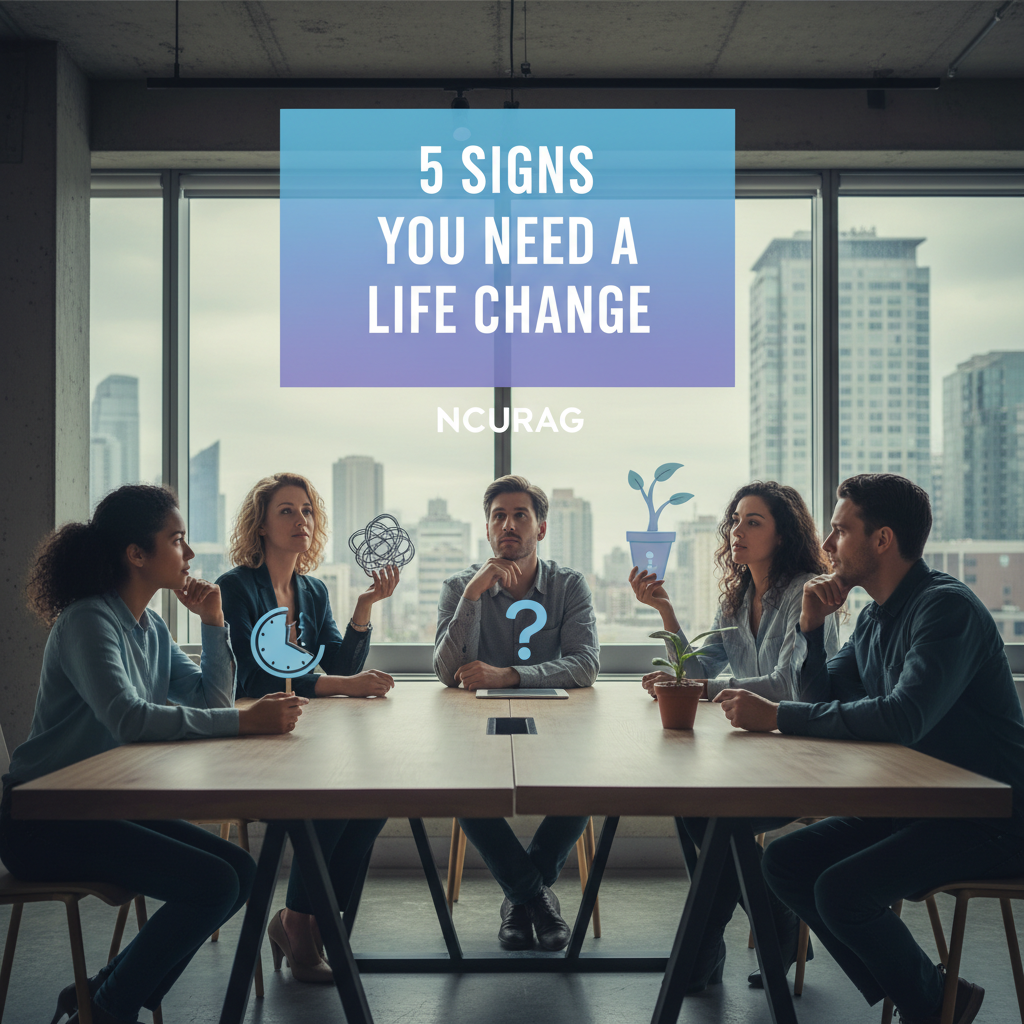
A few years back, I was performing "success" by everyone else's rubric: steady income, predictable routine, professional status. To the outside world, my life was a fortress of stability. On the inside, I felt like I was evaporating.
I wasn't suffering from an acute catastrophe; I was suffering from a terminal lack of vitality. I was checking boxes that someone else had printed for me. The wake-up call wasn't a lightning bolt—it was a quiet, suffocating Sunday afternoon when I realized I couldn't name a single thing I was genuinely excited to build.
That was the moment I understood: comfort and fulfillment are not synonyms. Staying comfortable while you're quietly hollowed out isn't stability—it's just a slower, more expensive kind of stagnation. If you're looking to break this cycle, check out our guide on intentional life design.
If that resonates, look closely. The map to your next chapter is written in these signs.
The 5 signs it's time for a life change after 40

1. Sunday nights feel like a countdown to dread.
There's a vast chasm between "not loving the grind" and physically dreading the coming week. If Sunday evenings consistently feel like a storm front moving in—marked by anxiety and an unexplained heaviness—your nervous system is telegraphing a message. Persistent dread is not a personality quirk; it's an alarm.
2. You've stopped dreaming.
Remember when you held a vivid vision of what your life could be? Projects you wanted to architect, landscapes you wanted to explore, a rhythm you wanted to claim? If those thoughts have gone quiet—not because you're satisfied, but because you've decided they're impossible—that's a red flag. Resignation dressed up as maturity is still resignation.
3. Your body is keeping score.
Chronic tension, restless sleep, or a bone-deep exhaustion that no weekend retreat can resolve. Our bodies are remarkably honest even when our minds are masters of denial. If you're physically fraying without a medical cause, examine the emotional weight you're carrying. Stress that has nowhere to go inevitably settles into your cells.
4. You're envious of those who leaped.
Not the petty jealousy of a bystander, but that visceral, sharp-edged pull when you hear about someone who pivoted their career at 50 or traded their corner office for a life of their own design. That envy isn't random; it's unexpressed desire looking for a place to land. Use that envy as a compass to point toward what you actually want. For inspiration on making the jump, read our recent career pivot case studies.
5. You've been saying "someday" for years.
Someday I'll pivot. Someday I'll prioritize my health. Someday I'll stop living for the résumé and start living for the resonance. If "someday" keeps receding into the future, the problem isn't the timing—it's the fear. And fear is a phenomenon to be analyzed, not a life sentence to be served.
Action Steps
- Conduct a radical life audit. Spend 30 minutes with a journal. Rate your life across five pillars—career, health, relationships, environment, and personal growth—on a scale of 1 to 10. Don't rationalize the numbers; trust your gut. The lowest scores are your clear, objective starting points.
- Catalog your "somedays." Write down every deferred dream. Getting them out of your head and onto paper strips away their power to haunt you and reveals their potential to be planned.
- Find a "bridge" person. Connect with someone who has already made a pivot. You don't need to copy their blueprint, but you do need to hear the truth about the transition. One candid conversation can demystify the fear of the unknown.
- Identify the minimum viable action. Forget the five-year plan. What's the smallest, most tangible step you can take in the next 48 hours? Research, a single email, or a phone call. Momentum isn't the precursor to action; it's the byproduct of it.
- Grant yourself permission to be bold. If you've spent decades being "practical" and "responsible," giving yourself permission to desire more feels like an act of rebellion. It isn't. It's an act of reclaiming your own agency.
Ready to Reclaim Your Edge?
Join the NCURAG inner circle for weekly insights on career pivots, lifestyle design, and living with intention after 40.
The Bigger Picture: Navigating life transitions after 40
The second half of life isn't designed to be a slow, quiet fade. It's designed to be a recalibration. By 40, you possess something you lacked at 25: real-world literacy, hard-won resilience, and a brutal honesty about what actually matters.
That depth isn't an excuse to play it safe—it's the fuel for a more intentional trajectory. Whether that means a complete pivot or a profound shift in how you inhabit your current days, the life you crave isn't unreachable. It's simply waiting for you to stop treating your dreams as optional.
At NCURAG, we don't look back at who we were; we focus on who we are becoming. We aren't just building careers; we are designing lives that require no further justification.
Your Next Step
If these signs hit home, you're not drifting—you're waking up. You aren't too late; you're exactly on time.
Start by exploring our archives for more rigorous, honest conversations about navigating life after 40. If you're ready to stop waiting for permission, join the community of professionals who have already decided that the best version of their story is the one they're writing right now.
The signs were always there. Now that you've read them, it's time to move.