Slow Travel and Personal Growth: Reset Your Next Decade
Learn how one intentional slow travel trip a year can break professional burnout, restore work-life balance, and fuel your personal growth after 40.

Does This Sound Familiar?
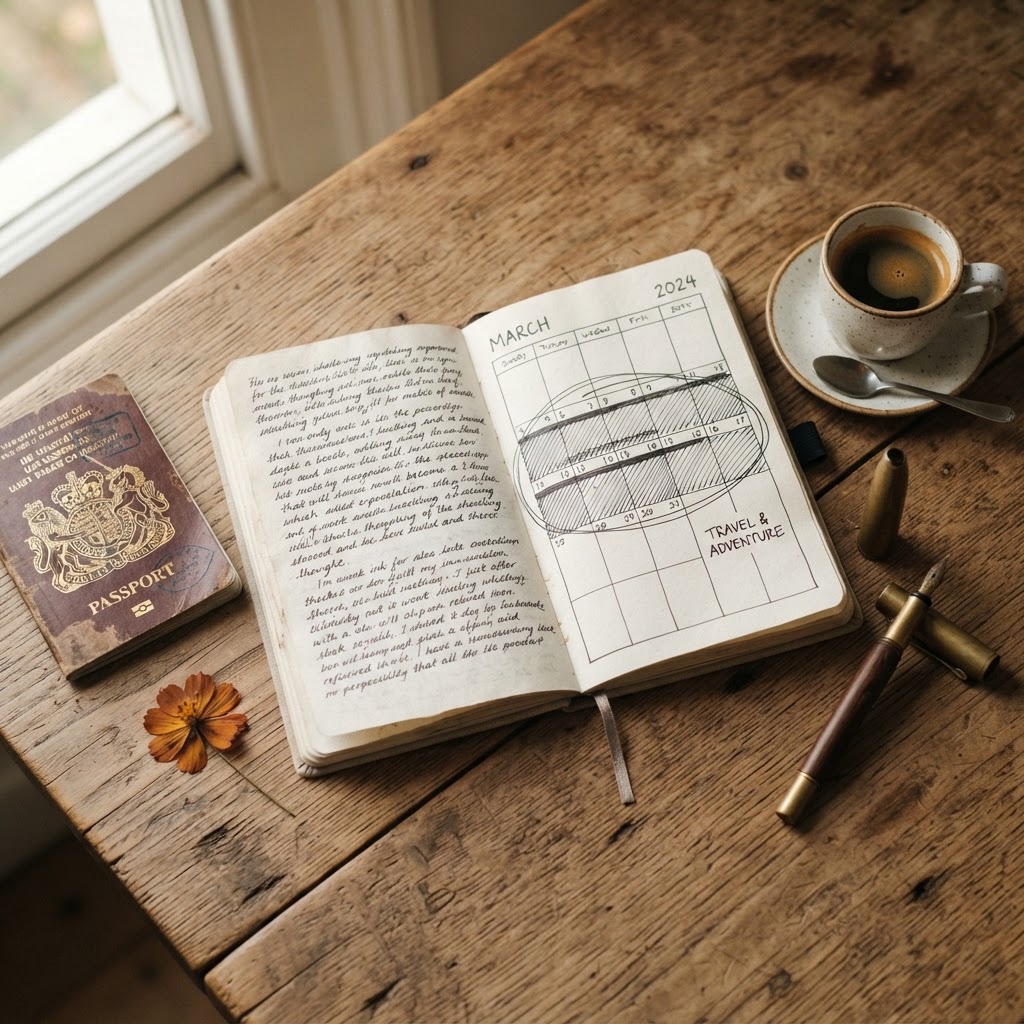
You wake up on a Monday morning, pour your third cup of coffee before 9 a.m., and somewhere between answering emails and sitting through your fifth video call of the day, you think — is this it? Not in a dramatic, crisis kind of way. Just a quiet, persistent whisper that asks whether the treadmill you're on is actually taking you somewhere you want to go.
If you're a professional over 40, you know exactly what I'm talking about. You've built something real — a career, a reputation, a life. But somewhere along the way, the building became the only thing. Rest became a reward you never quite earned. Travel became something you'd do "when things slow down." And things never slow down.
Here's what I've learned: don't wait for your schedule to clear. It won't. You must change the pace yourself. Do it once a year. Pack a suitcase, leave the routine behind, and commit to being still.
When was the Last Time You Intentionally Unplugged?
What would you miss if you unplugged from your phone or social media for a week or two? We have become so connected that we are often fearful that we will miss something. What that means is the phone, social media companies, jobs, electric companies, and media companies are all winning. We are so glued to everything that is going on around us that we often lose ourselves in the noise. Do you really think the world would collapse if you were not available for a week or two? When we slow the world down and become present with our surroundings, we can think more clearly and appreciate the small things we often ignore because the machine has us constantly running a race.
I'm not talking about the frantic travel style — hitting six cities in eight days, chasing likes on social media, and returning home more exhausted than when you left. I've done that. It looks great on a screen but feels hollow in your body.
I'm talking about slow travel — staying somewhere long enough to buy groceries at the local market, to know which café has the best coffee, to stop checking your watch. One place. Enough time. Real presence.
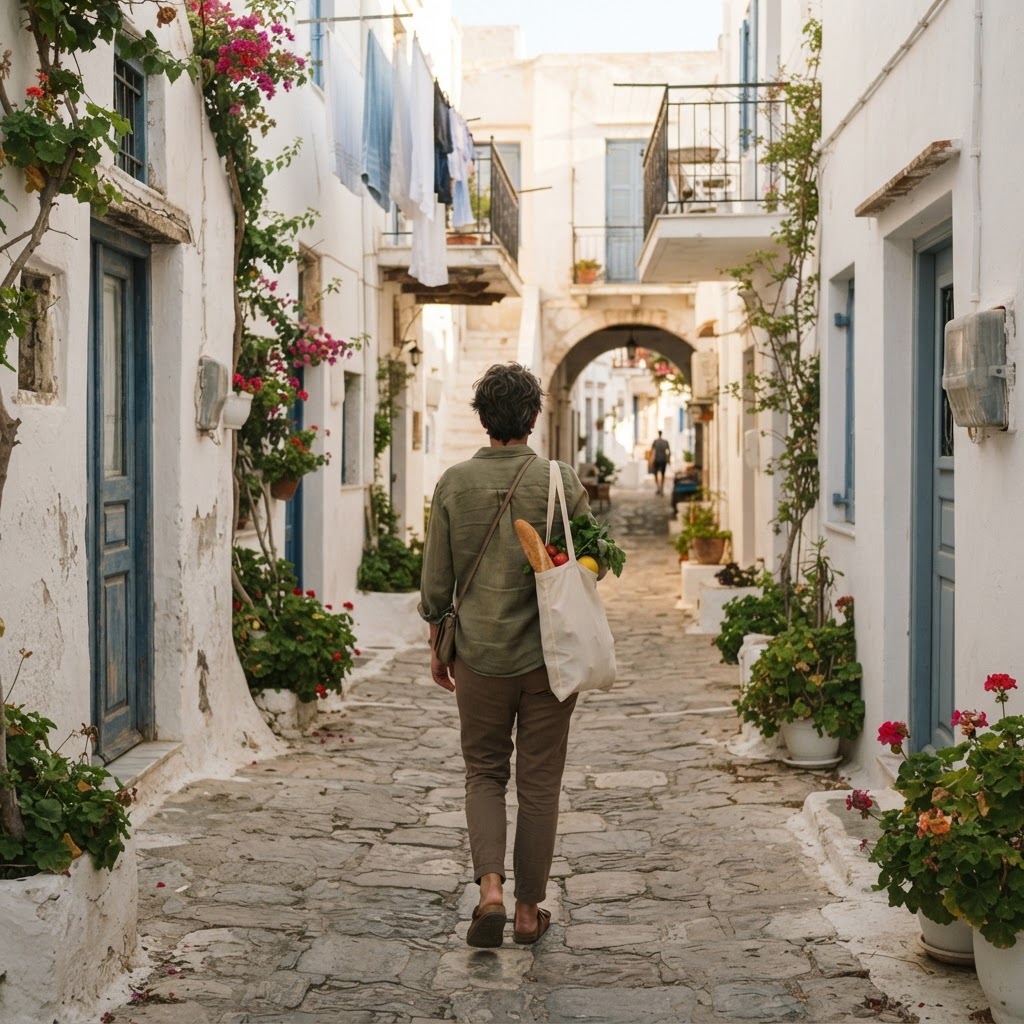
If you're exploring what intentional travel after 40 really looks like, this is the philosophy in action — not a packed itinerary, but a deliberate choice to be somewhere fully.
A few years ago, I committed to taking one intentional trip a year. Not a vacation stuffed between work deadlines. Not a long weekend squeezed before a Monday presentation. A real, slow, purposeful trip. The kind where you show up without a packed itinerary and give yourself permission to think — about who you are, who you're becoming, and whether those two things are actually aligned.
That shift changed everything. Not because travel is magic. But because stepping fully out of your routine forces a clarity that no amount of journaling or goal-setting at your kitchen table can manufacture. When you remove the familiar, you finally see yourself without the costume.
The Real Lesson
Professional burnout doesn't usually announce itself with a dramatic breakdown. For most of us over 40, it shows up quietly — as irritability, as lost curiosity, as the feeling that your ambitions have somehow become obligations. You're still performing. You're just not growing. If that resonates, it may be time to break free from the quicksand of stagnation before it costs you another year.
Slow travel interrupts that pattern in a way that nothing else quite replicates. Here's why it works:
It forces intentional living. When you're in an unfamiliar place, moving at a slower pace, you make deliberate choices all day long — where to walk, what to eat, who to talk to. That intentionality bleeds into bigger questions. What do I actually want my next ten years to look like? What have I been tolerating that I shouldn't be? What have I been postponing that I can't afford to keep postponing?
It breaks the identity loop. At home, you are your title, your schedule, your responsibilities. Abroad — especially somewhere slower, somewhere different — you're just a person. That anonymity is incredibly liberating. Without the roles, you reconnect with the person underneath them.
It creates distance from noise. Work-life balance is nearly impossible when your laptop and your couch are six feet apart. Physical distance creates psychological distance. Problems that felt enormous at home often look entirely different — smaller, or sometimes finally solvable — when you're sitting in a piazza in Portugal or watching the sun set over the water somewhere you've never been before.
It plants seeds for the next decade. Every slow trip I've taken has left me with at least one idea, one priority shift, or one decision I wouldn't have made otherwise. The reset isn't just emotional. It's strategic. You come home with new eyes — and new vision for what comes next.
Action Steps
- Schedule it before you're ready. Don't wait until work slows down or life gets less complicated. It won't. Put the trip on the calendar now — even if it's ten months away. Commitment makes it real. Everything else adjusts around a commitment.
- Choose depth over breadth. Pick one destination and stay longer than you think you need to. Two weeks in one city beats two weeks in seven. You want to settle in, not check off. Slow travel requires enough time to actually slow down.
- Travel with a question, not just a checklist. Before you leave, write down one or two honest questions you want to sit with during the trip. What do I want the next chapter of my career to look like? What does a well-designed life actually mean to me? Let those questions breathe in the background as you move through each day.
- Disconnect on purpose. Set boundaries with work before you go — real ones. Out-of-office messages, delegated responsibilities, limited check-in times if absolutely necessary. The clarity you're seeking cannot coexist with a full inbox demanding your constant attention. Protect the space.
- Debrief when you return. Within the first week home, sit down and write — not a travel journal recap, but a reflection. What shifted? What decision is clearer now? What do I want to do differently? That reflection is where the trip pays its longest dividends.
The Bigger Picture
Here's the truth about reinvention after 40: it rarely happens in the middle of your regular life. The noise is too loud, the demands too constant, the familiar patterns too deeply grooved. Real shifts — the kind that redirect the next decade — need space to emerge.
Slow travel creates that space. Not because you're running away from your life, but because you're stepping back far enough to actually see it. And when you can see it clearly, you can shape it deliberately.
Work-life balance isn't a policy your company gives you. It's a practice you build — trip by trip, choice by choice, year by year. Every time you commit to an intentional, slow trip, you're not just recharging. You're designing. You're telling yourself — and the world — that your growth matters enough to invest in it.
For those of us over 40 who have spent decades building for everyone else, that's not selfish. That's survival. And more than survival — it's the foundation of a second act that's actually worth showing up for.
Your Next Step
If something in this post hit home, you're not alone. The NCURAG community is full of professionals over 40 who are done waiting for permission to grow — in their careers, in their mindsets, and yes, in their travels.
Start small: pull up your calendar right now and block out two weeks sometime in the next twelve months. Label it. Protect it. Then join the newsletter so you don't miss what comes next — we'll keep unpacking how to build a life and a travel practice that's actually worth the effort you've been putting in. And if you're ready to go deeper right now, start your 30-day reset today.
You've spent enough time building for the future. It's time to design it.